From Parlour to Living Room: A Room Changes Its Name
From parlour to living room, learn how to read a room’s name alongside its layout, furnishings, and traces of everyday use without mistaking clues for proof.
“Parlour” and “living room” describe different expectations, but neither label tells the whole story of a home. In American domestic interiors, a parlour commonly named a space for receiving visitors, while “living room” put more emphasis on household life; actual use varied by place, period, and family.
The parlour emphasized receiving visitors
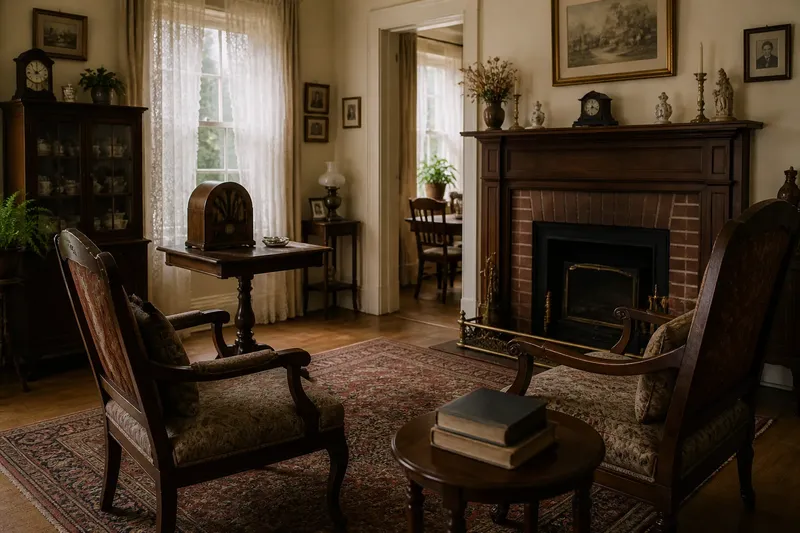
The word parlour is associated with conversation and reception. In some American homes, a room bearing the name was kept ready for visitors, with chairs arranged for conversation and objects displayed on a mantel or cabinet. Such arrangements could distinguish guest-facing hospitality from work and rest elsewhere in the home.
That is a useful interpretation, not a universal rule. A household might use its parlour regularly, and its furnishings could reflect practical needs as well as social presentation. Look at what the room displays and what it keeps out of sight.
Living room put household activity in the name
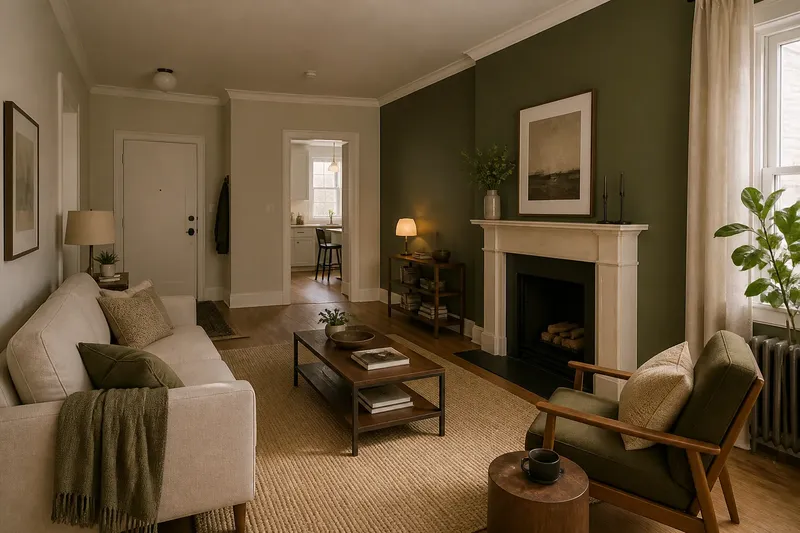
“Living room” places emphasis on the occupants’ everyday life rather than on a visitor’s arrival. Furniture such as a sofa, reading lamp, games table, or radio could support several activities, although the label alone cannot establish how often people used the room or how formal it felt.
Imagine a household with a room labeled “parlour” on its plan, two chairs facing each other, and a radio on a nearby table. The occupants turn the chairs toward the radio for an evening program, then return them to face one another when visitors arrive. The observable arrangement supports both shared household use and guest reception; the room’s name does not settle which use mattered more.
Read parlour and living room labels alongside physical evidence
A floor-plan label records a designation, while doorways, furnishings, and surface wear offer other clues. None proves a room’s purpose on its own: wear may have several causes, and a formal-looking arrangement may still have served daily routines.
- Furniture orientation: If chairs face each other, consider conversation as a likely use; if they face a hearth, window, or shared device, consider that focus instead, while keeping other uses open.
- Access: If the room opens directly near an entrance, note that receiving visitors may have been convenient; if it sits within daily household circulation, consider routine use as well.
- Surface condition: If a path or seat shows wear, consider frequent use; if surfaces appear carefully preserved, consider display or limited use, but seek other clues before deciding.
- Objects at hand: If books, games, sewing materials, or serving pieces are positioned for use, consider the activities they support; if such objects are displayed out of reach, consider presentation as another possibility.
- Display: If portraits or ornaments dominate visible surfaces, note what the household chose to show; if practical objects share those surfaces, consider how display and use may have overlapped.
- Connections to other rooms: If a doorway links the room to dining or work areas, consider how those routes could support household routines; if the room is more separate, consider whether that separation served privacy or reception.
Record what you can see separately from what you infer.
How should you interpret room names?
Does “parlour” always mean a formal room?
No. The term suggests a connection with receiving and conversation, but a particular household might also have used the room for routine activities. Compare its label with the access, furnishings, and other available evidence.
Did living rooms replace parlours everywhere?
No. The terms could coexist, and naming and use could change at different times. Interpret a label in its local context rather than treating it as evidence of a uniform transition.
What can furniture arrangement tell you?
It can indicate which activities the layout made convenient, such as face-to-face conversation or attention to a shared focus. It cannot establish how often those activities happened or who was welcome.
Can one room serve both purposes?
Yes. A room could be arranged for visitors and still support reading, conversation, or other household routines. Flexible furniture and household custom could matter more than a strict distinction between room types.
Compare a room’s label with its layout and use
For a focused reading, use an available floor plan, description, or preserved interior and record only evidence you can actually observe. Do not handle furnishings or treat a single clue as a settled conclusion.
- Copy the room label. Record the exact wording from the plan or description, such as “parlour” or “living room.” If no label is available, note that absence rather than supplying one.
- Trace the access. Note which doors connect the room to the entrance and neighboring spaces. If access is direct from the entrance, consider convenient reception; if the room lies along household circulation, consider routine movement too.
- Record the arrangement. Note where chairs face and which objects are within reach. If seating forms a conversation group, consider that use; if it faces a hearth, window, or device, consider the shared focus as well.
- List visible objects and wear. Separate objects positioned for use from those arranged for display, and describe any wear without assigning it a cause. If several clues point to an activity, treat it as plausible; if they conflict, keep multiple interpretations.
- Write a qualified reading. State one likely social role and one uncertainty. If the label and physical evidence agree, say they support the same interpretation; if they differ, report the mismatch instead of forcing a single category.
Say you have a hypothetical plan labeled “living room,” a doorway from the hall, chairs facing a fireplace, and books on a low table. You copy the label, trace the hall connection, record the chairs’ shared focus, and note that the books are within reach. The resulting reading is that the room’s name and arrangement are consistent with household use, while the hall access and seating could also accommodate visitors; without evidence of actual routines, the balance between those uses remains uncertain.
A room name records an expectation, not a complete history
The shift in emphasis from parlour to living room is clearest when treated as a change in what the names suggest, not as a universal sequence in which one room type simply replaced another. Hospitality, display, privacy, and everyday activity could overlap in the same interior.
When reading a parlour or living room, compare its name with its layout and furnishings, then state what remains unknown. That restraint makes the phrase “from parlour to living room” useful: it opens a question about whose presence the room anticipated without pretending the label can answer it alone.